
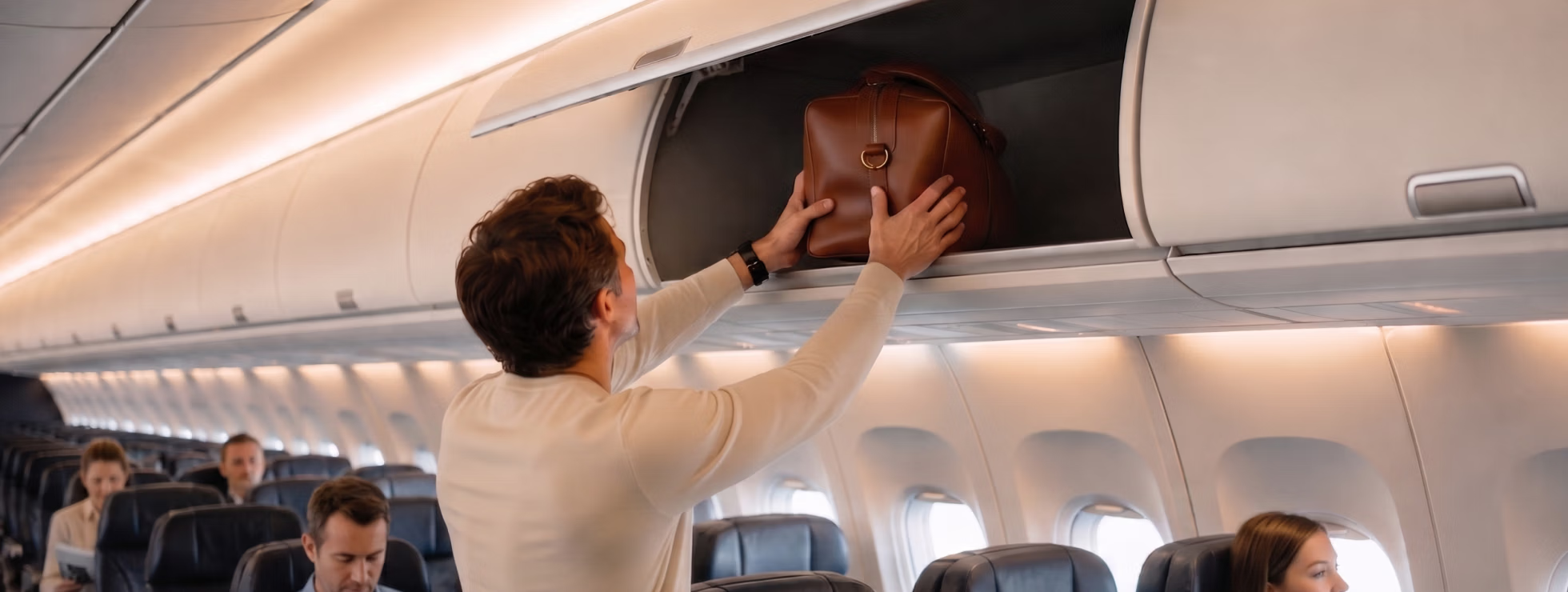
Whether you’re packing for a weekend getaway or a two-week vacation, one question comes up before almost every flight: should you check a bag or carry it on?
The right answer depends on your trip, your airline, and what you need to bring. Knowing the difference can help you avoid unexpected fees, pack with confidence, and feel more prepared for your travel day.
For many travelers, a carry-on keeps things simple. If you’re packing light, you can skip bag drop, head straight to airport security after checking in online, and leave the airport without stopping at baggage claim when you land.
A carry-on can be a good choice for a short trip, especially if everything fits into a small suitcase and personal item. It can also help when you have a tight connection or simply want to keep your belongings with you throughout your journey.
It depends on your airline and fare. Carry-on allowances vary, so check what’s included before you book. If your bag costs extra, factor that fee into the total cost of your trip.
Basic economy and budget fares may have different baggage rules. Depending on the airline and fare, your ticket might include a personal item but charge extra for a full-size carry-on or checked bag. Other fares may include a carry-on but charge separately for checked bags.
Before booking, compare the total cost of your flight with the bags you plan to bring. A lower-priced fare could cost more once bag fees are added. The U.S. Department of Transportation recommends reviewing baggage fees and ticket restrictions before purchasing your flight.
There isn’t one carry-on size limit across every airline. The Federal Aviation Administration notes that most airlines have a maximum carry-on size of 45 linear inches, which is the combined height, width, and depth of the bag.
Airlines can set their own dimensions and limits for carry-ons and personal items, so check your airline’s bag policy before you pack.
Checking a bag can be a good choice for longer trips, bulky clothing, sports equipment, full-size toiletries, or anything else that won’t comfortably fit in a carry-on.
A checked bag can also make sense when you’re bringing several pairs of shoes, formal clothing, or other larger items. Instead of packing around cabin restrictions, you’ll have more space for what your trip requires.
Checking a bag will add another stop before airport security, so make sure to plan enough time to drop off your luggage before heading to your gate. After bag drop, CLEAR+ Members can speed through airport security in seconds with exclusive access to our dedicated CLEAR+ Lanes.
Each airline sets its own checked baggage limits, and allowances can vary based on your fare, route, or other factors. Oversized and overweight bags may cost extra, so measure and weigh your luggage before leaving home.
Check your airline’s baggage policy before your trip so you know which limits and fees apply.
Airlines may charge for checked bags separately from the base airfare. What you pay can depend on your airline, fare, route, and number of bags.
Some airline loyalty programs and travel credit cards may include checked bag benefits. Check your ticket and any eligible travel benefits before paying for your luggage.
Whether or not you’re checking a suitcase, keep anything you’ll need during your flight—and anything difficult to replace—with you at all times.
Pack your ID or passport, medications, wallet, valuables, and important electronics in your carry-on. A change of clothes and basic toiletries can also come in handy, especially on longer trips.
Spare lithium batteries, including power banks and portable chargers, must stay in your carry-on. The FAA’s PackSafe guidance explains how to travel safely with lithium batteries and battery-powered devices.
Be aware that the TSA restricts certain sharp objects, sporting equipment, and other potentially dangerous items from the cabin. Some can go in checked luggage, while others can’t fly at all. If you’re unsure about an item, check the TSA “What Can I Bring?” guide before packing.
For many trips, yes. Packing with your itinerary in mind can help you fit a week’s worth of clothing into a carry-on. Choose pieces that work together, limit shoes, and plan to rewear certain items to make the most of your space.
But fitting everything into a carry-on doesn’t have to be the goal. If you’re traveling for business, attending a formal event, visiting different climates, or simply need more belongings, checking a bag may be the better choice.
Your toiletries might make the decision for you. TSA’s 3-1-1 rule generally limits carry-on liquids, gels, and aerosols to containers of 3.4 ounces or less, with those containers fitting inside one quart-sized bag. Similar restrictions can apply to foods like yogurt, sauces, and spreads.
If you need larger toiletries that are allowed in checked baggage, packing them in your checked suitcase may be more convenient. Check the rules for any specific item you’re unsure about before you pack.
Some trips come with more than one suitcase. Families may be juggling bags, strollers, car seats, and children’s bags. Ski trips, golf vacations, and longer journeys can also mean navigating the airport with oversized gear or multiple bags.
CLEAR now offers a premium service called CLEAR Concierge, which is perfect for families flying with kids or anyone who could use an extra set of hands through the airport for a stress-free travel day. With CLEAR Concierge, your personal airport concierge will meet you at the curb when you arrive, help you and your family with bags and check-in, and bring you straight through airport security and to your gate or lounge.
Once you’ve decided to check a bag, a little preparation can make the experience more seamless. Check in online when your airline allows it, confirm when bag drop closes, and give yourself enough time to check your luggage before heading to airport security.
Label your suitcase with your contact information before leaving home. If your itinerary includes flights on different airlines, confirm whether your checked bag will transfer to your connecting flight or whether you’ll need to collect and recheck it.
Think about your whole trip—not just what you can fit into a suitcase. A carry-on can help you skip bag drop and baggage claim, making it a good fit for shorter trips. A checked bag gives you more room for longer trips, bulky clothing, equipment, and larger toiletries.
Your itinerary matters, too. A tight connection may make a carry-on more appealing, while a longer vacation may make the extra space in a checked bag worth it. Traveling with kids, multiple suitcases, or oversized gear can also change what works best.
There’s no single right choice for every trip. Consider your trip length, packing list, baggage allowance, and itinerary, then choose the option that gives you more confidence and control heading into your travel day.
Be the first to hear about news and updates from CLEAR—sign up for our mailing list below.





.svg)
